Thinking about branding your company’s clothing but not sure what it involves? Wondering which method works best for personalising garments? Find out what screen printing is and how the machine that makes it possible actually works.
What Is Screen Printing?
Screen printing is a garment branding method that allows selected designs, graphics, and text to be applied to chosen materials. The technique has been developing for several decades and is a direct descendant of stencil printing — a method of creating graphic images using pre-prepared templates.
Screen printing uses specialist screen printing inks, which are pushed through the mesh of a screen onto a prepared substrate (fabric or garment). Because the process uses templates, a specific form must first be created on the printing mesh using a light-sensitive emulsion.
A screen printing machine can be used to brand flat materials as well as more complex items. It is suitable for printing on:
- clothing,
- metals,
- plastics,
- paper.
Is Screen Printing Cost-Effective?
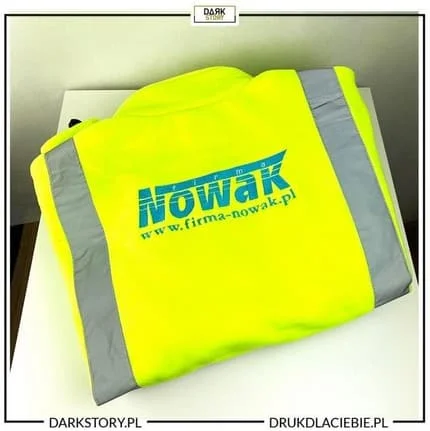
Screen printing machines are typically very efficient, capable of branding large quantities of materials in a single run. Prints generally last for around 150 washes, making the technique a cost-effective choice for applications like corporate workwear.
A screen printing machine can work with high-quality clothing and with polyester materials alike. This makes it an excellent option for businesses looking to promote their brand affordably using garments bought in bulk. Many print shops offer not only screen printing services but also access to a ready-to-use clothing range. What’s more, working with print shops that use high-quality equipment ensures that screen-printed designs are both durable and visually attractive.
How Does a Screen Printing Machine Work?
Screen printing technology can seem complex at first glance, and many people want to understand how the machine works before committing to it. The process involves several stages that together produce the finished print.
The first step is preparing the films — the graphic files in the correct format. If the design contains more than one colour, the colours must be separated. This is essential for preparing the stencil correctly, as each colour must be saved as a separate file. The prepared screens are then used in the exposure stage. This uses a negative technique, and because the emulsion is highly light-sensitive, the process is typically carried out in a darkroom. The material being applied should be spread evenly across the entire screen so that, during the drying stage, it adheres and cures correctly in all the right places. The entire process is typically handled by experienced professionals who work with screen printing machines daily.
The exposure stage is brief, and as soon as it’s complete the screen is quickly moved to washing. Where the emulsion has not hardened, it dissolves — and where the film created small openings, ink will be able to pass through in the next stage.
The machine comes into play at the printing stage itself. The prepared screens are mounted onto a special carousel, and the squeegee spreads ink evenly across the previously marked material. The garment is printed in the designated areas. Because the machine can accommodate multiple screens simultaneously, it is perfectly suited to multi-colour printing.